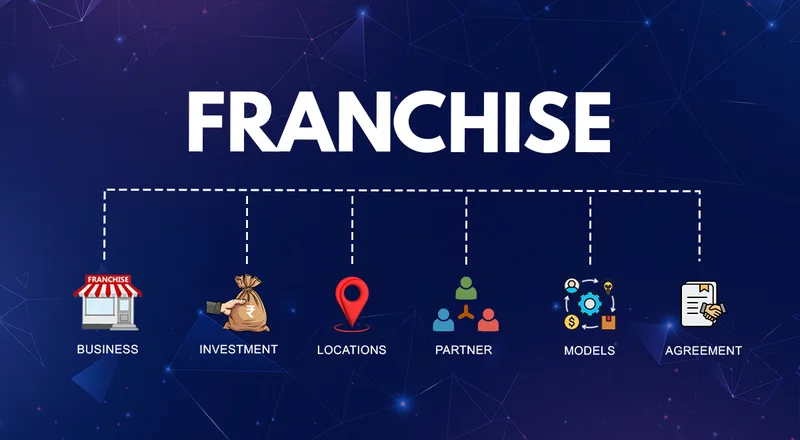
Evaluating Polish Franchise Opportunities
- Reviewing the Financial Disclosures of the Franchisor
- Understanding the Legal Autonomy of the Franchisee
- Tax Structuring for Franchise Fee Payments
- Resolving Disputes Through Commercial Arbitration
- Frequently Asked Questions (FAQ)
- What is the maximum duration for a post-term non-compete clause in Poland?
- Do Polish franchisors have to register their franchise agreements with the government?
- How does the 2026 KSeF system affect my daily franchise invoicing?
- Can a franchisor legally dictate the exact retail prices I charge local customers?
Reviewing the Financial Disclosures of the Franchisor
Financial disclosure involves analyzing the franchisor's historical revenue, upfront fees, and projected return on investment to validate the true profitability of the network under Polish accounting standards.
Poland does not impose a statutory Franchise Disclosure Document (FDD) comparable to the United States. You evaluate the business model based on general pre-contractual negotiation rules embedded in the Polish Civil Code. Franchisors operating ethically follow the Polish Code of Good Practices for the Franchise Market. This framework requires them to provide essential financial data before executing any binding agreement. You must demand localized financial models rather than accepting translated spreadsheets imported from other European markets.
Hidden costs often destroy the projected profitability of new franchise units. Marketing fund contributions, mandatory software licensing, and supply chain markups require rigorous independent scrutiny. You should verify the franchisor’s financial claims by pulling their historical financial statements directly from the National Court Register (KRS). The KRS repository provides free access to the balance sheets and profit and loss statements of all registered Polish corporate entities. Comparing official statutory filings against glossy marketing brochures often reveals critical discrepancies in revenue generation.
We consistently see that prospective franchisees fail to cross-reference the franchisor’s financial models with the actual statutory filings available in the KRS. Your financial due diligence must extend deeply into the supply chain requirements stipulated within the franchise manual. Franchisors frequently generate their primary margin not from the headline royalty rate, but by mandating purchases from designated suppliers at above-market prices. You must calculate these embedded supply costs to determine your actual net operating margin.
Projected return on investment (ROI) heavily depends on local macroeconomic factors specific to the Polish business environment. High inflation and rising utility costs have disrupted traditional franchise financial models over the past three years. You need to stress-test the franchisor's assumptions using current 2026 energy tariffs and the latest minimum wage rates. If the business model collapses under these strict local stress tests, the franchise opportunity lacks long-term structural viability.
Many franchisors rely on master franchise agreements to scale rapidly across Central and Eastern Europe. If you negotiate with a master franchisee rather than the original brand owner, your financial review must double in scope. You must evaluate the financial health of both the local master entity and the global parent company. A well-capitalized parent brand cannot save you if the local master franchisee goes bankrupt due to poor regional management.
Interviewing existing Polish franchisees remains the most effective method to validate any financial disclosure. You should ask the franchisor for a complete, unrestricted list of operating units currently active within the country. Speaking directly with current operators uncovers the harsh reality of working capital requirements and actual break-even timelines. Their ground-level operational data provides a much more accurate picture of financial performance than any pro forma income statement provided by the sales team.
Understanding the Legal Autonomy of the Franchisee
Legal autonomy refers to your status as an independent entrepreneur under the Polish Civil Code, meaning you bear operational risks and liabilities distinctly separate from the franchisor.
Polish civil law classifies franchising as an innominate contract governed by the freedom of contract principle under Article 353(1) of the Civil Code. You operate as an entirely independent business entity, usually structured as a limited liability company (sp. z o.o.) or a sole proprietorship. The franchisor grants you a limited license to utilize their intellectual property and proven business system. However, they do not absorb your debts, labor disputes, or operational failures under any circumstances.
Your legal autonomy faces strict limitations imposed by the Polish Office of Competition and Consumer Protection (UOKiK). Competition law strictly prohibits franchisors from setting fixed or minimum resale prices across their network. The franchisor can legally only suggest or recommend maximum retail prices. If your franchise agreement forces you to sell products at a specific fixed price, that clause is legally void. Both parties risk severe administrative financial penalties for executing such antitrust violations.
Operational control heavily impacts your status and financial obligations as an independent employer. Starting January 1, 2026, Polish labor regulations count periods of running a business and performing work under civil law mandate contracts toward employee seniority. This legislative reform significantly impacts franchisee human resources costs. Your employees now reach higher statutory thresholds for notice periods, severance pay, and paid vacation days much faster than before. You must factor these accelerated, mandatory labor costs into your operational planning and cash flow forecasts.
Data protection compliance represents another critical area where your operational autonomy carries heavy legal weight. As an independent legal entity, you act as the primary data controller for your local customer database and employee records under the GDPR. The franchisor cannot legally mandate unrestricted access to your local customer data without establishing a formal, documented joint-controller agreement. You bear the primary regulatory risk if a data breach occurs at your specific franchise location.
Strict non-compete clauses further test the boundaries of your corporate independence. Franchisors routinely demand severe in-term and post-term non-compete agreements to protect their proprietary know-how. Under Polish law and European Union vertical block exemption regulations, post-term non-compete clauses cannot exceed one year following termination. They must also strictly relate only to the specific goods or services competing directly with the franchise. Any broader restriction violates antitrust rules and remains entirely unenforceable in a Polish commercial court.
Your autonomy ultimately dictates your direct legal liability toward individual consumers. Customers buying goods or services from your franchised location enter a binding sales contract directly with your company, not the global brand. You hold the primary responsibility for honoring warranty claims and managing consumer rights under Polish consumer protection laws. While the franchisor strictly controls the overarching brand image, your specific corporate entity absorbs the immediate legal and financial impact of all local customer disputes.
Tax Structuring for Franchise Fee Payments
Franchise fee payments require structuring around Polish VAT, Withholding Tax (WHT) for foreign franchisors, and mandatory reporting through the new National e-Invoicing System (KSeF) implemented in 2026.
Structuring cross-border royalty payments demands immediate, highly technical attention to Polish Withholding Tax regulations. Poland levies a punitive standard 20% WHT on royalties, trademark licensing, and franchise fees paid to foreign corporate entities. You can reduce or entirely eliminate this tax burden only by applying the relevant Double Tax Treaty (DTT). To benefit from favorable treaty rates, you must proactively obtain a valid Certificate of Tax Residence from the foreign franchisor before making any payments.
In our practice tracking CEE markets, we consistently see that foreign franchisors underestimate the strictness of Polish tax residency certificate requirements during audit proceedings. The Polish tax authorities rigorously scrutinize all cross-border franchise payments for genuine economic substance. If the foreign franchisor acts merely as an intermediary holding company without real employees or office space, the tax office will deny the preferential treaty rate. You, acting as the Polish remitter, bear the total financial risk and penalty for any uncollected WHT.
Domestic franchise transactions fall squarely under standard Polish Value Added Tax (VAT) rules and compliance mechanisms. Franchise fees and ongoing royalties attract a standard 23% VAT rate. You can systematically deduct this input VAT against the output VAT generated directly from your local retail sales. The procedural landscape for B2B transactions changed fundamentally with the phased rollout of the mandatory National e-Invoicing System (KSeF) in 2026. All domestic franchise invoices must now securely process through this centralized government platform to remain legally valid.
Corporate Income Tax (CIT) structuring offers distinct strategic advantages for well-advised Polish franchisees. Standard corporate CIT rates stand at 19%, with a highly beneficial reduced 9% rate available for qualifying small taxpayers. Many aggressive franchise operators now structure their corporate entities specifically to utilize the popular "Estonian CIT" model. This specific tax regime defers corporate tax entirely until you actually distribute dividends to shareholders. Reinvesting operating profits back into expanding your franchise network allows you to achieve massive compound growth without immediate tax leakage.
| Tax Regime | Corporate Tax Rate | Tax Trigger Event | Best Suited For |
|---|---|---|---|
| Standard CIT | 19% (Standard) or 9% (Small Taxpayer) | Annual generated operating income | Franchisees requiring regular, ongoing cash extraction |
| Estonian CIT | 0% upon earning; 10% or 20% effective rate upon distribution | Dividend distribution paid to shareholders | Aggressive reinvestment and multi-unit franchise expansion |
| Sole Proprietorship (Linear) | 19% flat rate + ~4.9% mandatory health contribution | Monthly/Annual generated business income | Single-unit operators managing lower total revenues |
Transfer pricing documentation becomes highly relevant if you operate as a master franchisee structurally linked to the foreign parent company. Polish tax authorities aggressively enforce rigorous transfer pricing rules on all related-party corporate transactions. Even if you maintain strict legal independence, significant financial control exerted by the franchisor might unexpectedly trigger associated-party scrutiny. You must actively benchmark your royalty rates against independent market transactions to legally defend their full deductibility during a tax audit.
Currency exchange volatility also heavily impacts your monthly tax liabilities and overall financial structuring. When your franchise fees are denominated in euros but your retail revenue is generated locally in Polish złoty (PLN), exchange rate fluctuations directly alter your taxable income. You must implement advanced accounting mechanisms to properly recognize foreign exchange differences. Failing to account for these swings can artificially inflate your tax base or trigger unexpected accounting losses.
Resolving Disputes Through Commercial Arbitration
Commercial arbitration allows franchise parties to bypass backlogged Polish state courts by submitting disputes to a private tribunal for faster, confidential, and binding resolution.
Polish common courts currently face severe structural delays, often taking three to five years to fully resolve complex commercial disputes. Franchisors and franchisees increasingly rely on private arbitration to protect their operational continuity and cash flow. By inserting a valid arbitration clause into your master franchise agreement, you permanently waive the right to litigate in a public state court. Instead, a specialized single arbitrator or a panel of three appointed experts definitively decides the legal outcome.
The Court of Arbitration at the Polish Chamber of Commerce (SA KIG) in Warsaw serves as the premier institution for these complex corporate proceedings. SA KIG operates under modernized 2026 rules specifically designed to expedite heavy commercial hearings. Arbitrators possess deep, specific industry expertise, ensuring they actually understand the complex nuances of intellectual property valuation and international supply chain logistics. This specialized knowledge actively prevents the erratic, unpredictable judgments sometimes issued by generalist state judges dealing with dense franchise models.
Data from recent corporate setups shows a 40% increase in the use of arbitration clauses to avoid the three-year backlog typical in Warsaw's commercial courts. Arbitration provides strict confidentiality, which remains critical for protecting vulnerable franchise trade secrets. Public court filings expose the franchisor's proprietary operating manuals and your specific financial vulnerabilities to local market competitors. Arbitration proceedings stay strictly private, effectively shielding the brand's reputation from highly negative public exposure during a bitter dispute.
Drafting the arbitration clause requires intense legal precision during the initial negotiation phase. You must explicitly specify the governing law, the exact number of arbitrators, the official language of the proceedings, and the exact physical seat of arbitration. Vague, poorly drafted clauses generate incredibly costly preliminary litigation simply arguing over jurisdiction. If the foreign franchisor insists on arbitration seated in their home country, you face massive travel expenses and foreign legal representation costs. You should aggressively negotiate for arbitration seated safely in Poland to level the judicial playing field.
Enforcing a final arbitral award remains a highly efficient, streamlined legal process. Poland is a long-standing signatory to the 1958 New York Convention on the Recognition and Enforcement of Foreign Arbitral Awards. This powerful international treaty guarantees that a Polish arbitral award holds immense weight across international borders. If you win a major financial dispute against a foreign franchisor, you can enforce the SA KIG judgment directly against their corporate assets in their home jurisdiction. The local state court simply stamps the award with an enforcement clause, minimizing further bureaucratic delays.
Interim protective measures remain legally available even if you choose to pursue private arbitration. If a legally terminated franchisee stubbornly refuses to de-brand their retail store, the franchisor cannot wait six months for a final arbitral award. Polish civil procedure uniquely allows parties bound by an arbitration clause to request immediate, binding injunctions from a public state court. This powerful dual-track approach protects the franchise network's brand integrity while the private tribunal takes the time necessary to resolve the core financial dispute.
Frequently Asked Questions (FAQ)
Frequently asked questions address the core legal, tax, and operational uncertainties prospective franchisees face when entering the Polish market.
What is the maximum duration for a post-term non-compete clause in Poland?
Under Polish competition law and European Union vertical block exemption regulations, a post-term non-compete obligation in a franchise agreement cannot exceed one year following contract termination. It must also strictly apply only to the specific physical premises and the exact competing goods or services.
Do Polish franchisors have to register their franchise agreements with the government?
No, there is absolutely no central government registry or regulatory body for franchise agreements in Poland. The commercial contract operates entirely under the general freedom of contract rules established within the Polish Civil Code and does not require any prior government approval.
How does the 2026 KSeF system affect my daily franchise invoicing?
The mandatory National e-Invoicing System (KSeF) dictates that all domestic B2B invoices between the Polish franchisee and local suppliers must be issued and received purely as structured XML files through the official government portal. Traditional paper or standard PDF invoices are no longer legally valid for B2B tax settlements.
Can a franchisor legally dictate the exact retail prices I charge local customers?
No. Polish competition law, aggressively enforced by UOKiK, strictly prohibits all forms of direct and indirect price-fixing. A franchisor can only suggest maximum resale prices to franchisees. Any contractual attempt to enforce fixed or minimum retail pricing is entirely legally void and triggers severe antitrust financial penalties.